Clean Burn: The Real Difference Between Soy, Beeswax, and Paraffin

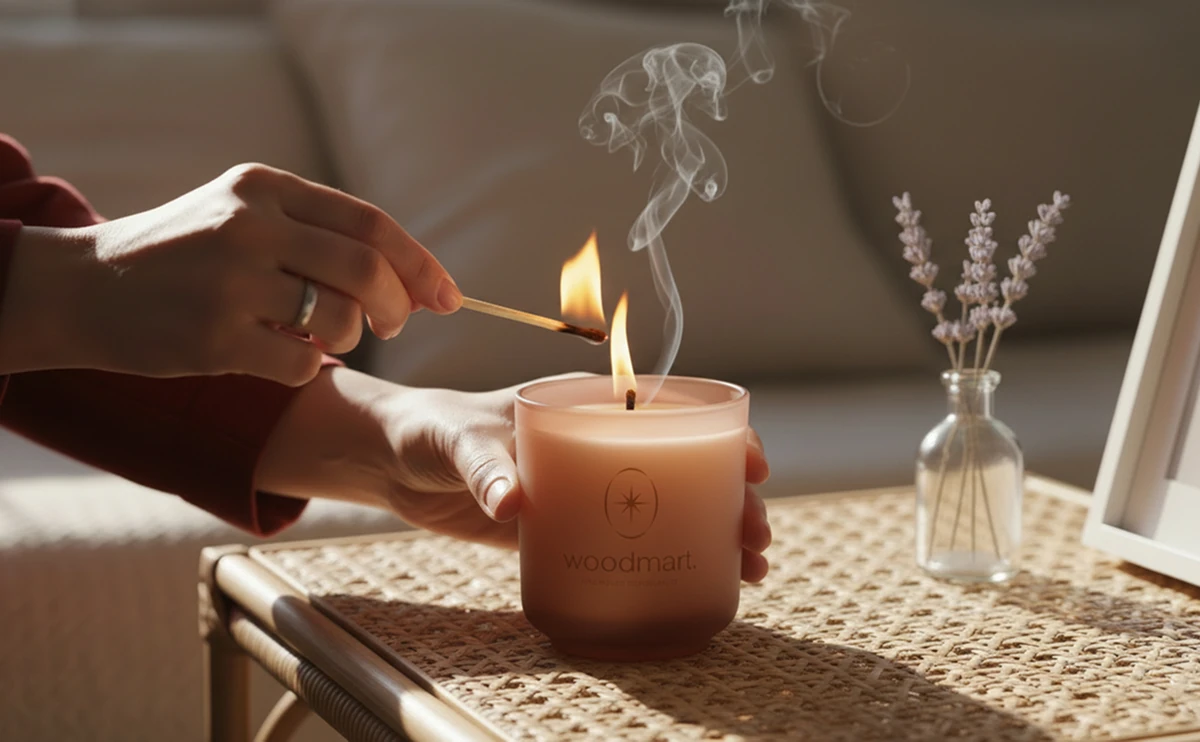
There’s a particular kind of magic in watching a handmade candle burn. The flame settles in slowly, a pool of melted wax spreading outward in perfect measure, releasing its scent in gentle, unhurried waves. It doesn’t rush. It doesn’t flicker out without ceremony. It simply burns — steadily, deeply, and for a remarkably long time.
If you’ve ever wondered why artisan candles seem to outlast their mass-produced counterparts by hours — sometimes days — the answer lies not in size or price, but in the quiet decisions made long before the wick is ever lit.
The wax makes all the difference
Most store-bought candles are made with paraffin — a petroleum byproduct that is cheap, easy to work with, and combusts quickly. Paraffin candles tend to burn hot and fast, tunneling down through the center and leaving thick walls of unused wax clinging to the sides of the jar. It’s efficient in the industrial sense: it produces a result with minimal cost. But it doesn’t linger.
Handmade candles, by contrast, are typically crafted from natural waxes — soy, coconut, beeswax, or thoughtful blends of all three. These materials have a lower melting point, which means they burn cooler, more slowly, and across the full width of the vessel rather than straight down. A coconut-soy blend, for instance, can extend the life of a candle by 30 to 50 percent compared to a paraffin equivalent of the same weight. The wax pool reaches edge to edge, ensuring almost nothing is wasted.
“A slow burn isn’t inefficiency — it’s the whole point. The candle isn’t in a hurry, and neither should you be.”
Fragrance, ratios, and the patience of curing
In a commercial candle factory, fragrance oil is added to melted wax and poured almost immediately. Volume and speed take priority. The candle that reaches the shelf may have been made just days before — sometimes hours. There is little time for the wax and fragrance to properly bond at a molecular level, which means the scent burns off unevenly and often too early in the candle’s life.
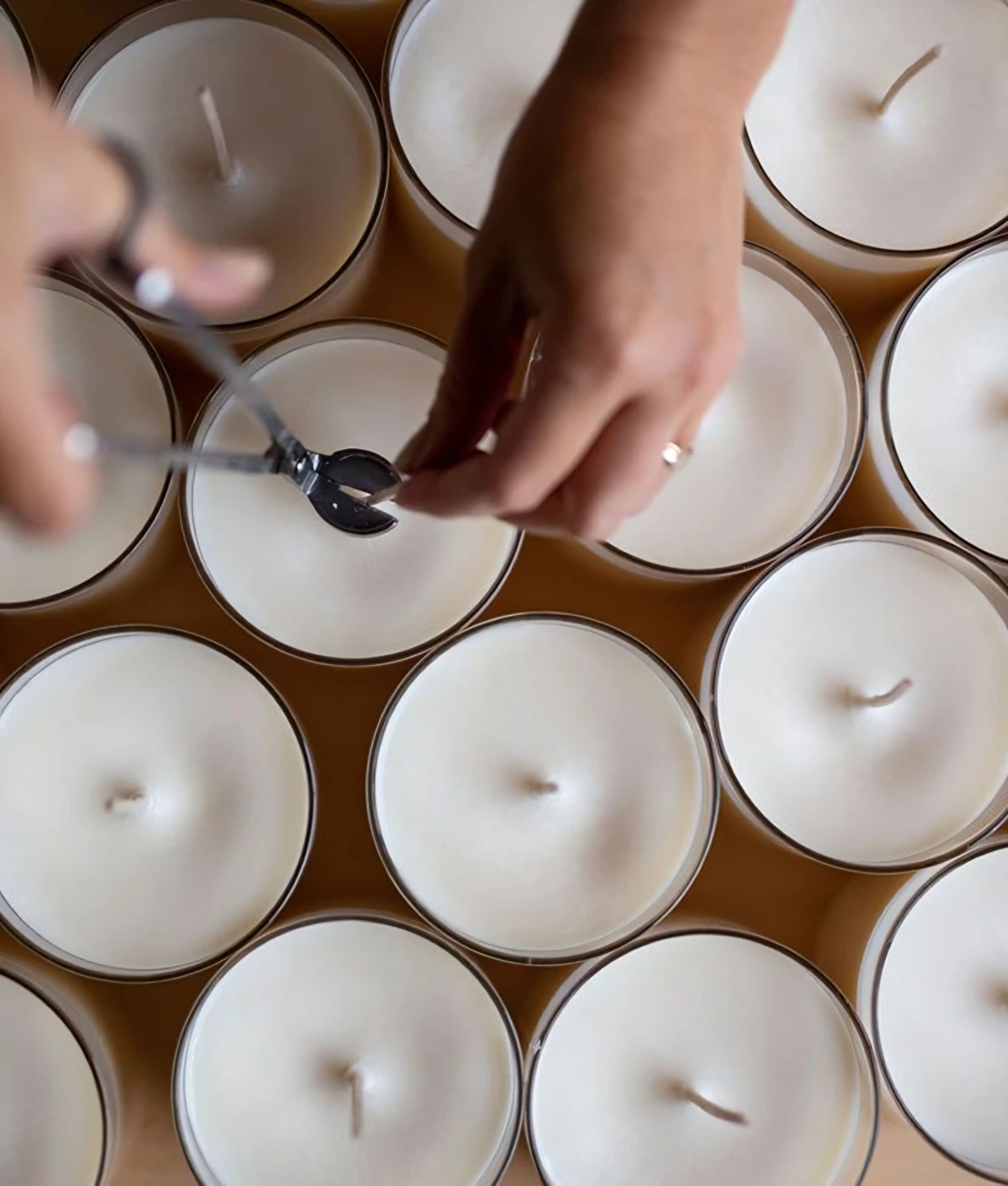
Handmade candles go through a curing process. After pouring, they rest — sometimes for a week or more — allowing the fragrance molecules to fully integrate with the wax structure. The result is a scent that releases gradually, consistently, and from the very first burn to the last. The throw, as candlemakers call it, is deeper and more complex because it was given time to develop.
The fragrance load itself is also handled with more intention in the artisan process. Too little and the scent is thin; too much and the oil pools on the surface, becoming a fire hazard. Getting this ratio right requires testing, patience, and a willingness to throw out batches that don’t meet the mark — something a mass-production line is simply not built to do.
The wick is not an afterthought
A poorly chosen wick is one of the most common reasons a candle fails to reach its potential. Too thick and the flame burns too hot, consuming wax faster than necessary and producing soot. Too thin and the flame drowns in its own wax pool, extinguishing early and leaving most of the candle behind. Finding the right wick for a specific wax, vessel diameter, and fragrance combination requires testing — often dozens of rounds of it.
Artisan candlemakers approach wick selection the way a chef might approach seasoning: intuitively, iteratively, and always in service of the final result. Cotton wicks, wood wicks, braided wicks — each behaves differently depending on the formula they’re paired with. The handmade process allows this level of specificity. The factory process, by design, does not.
Shop the collection
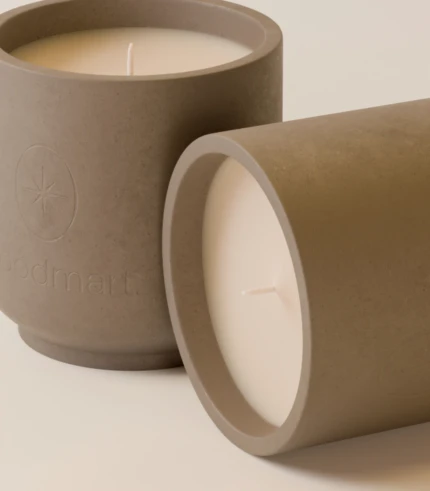


Burning slowly as a kind of philosophy
There is something worth sitting with in all of this. In an era that rewards speed, the handmade candle quietly insists on doing things properly. The wax is chosen for its character, not its cost. The fragrance is given time to settle. The wick is selected with care. And then the whole thing is left to cure, unhurried, until it is ready.
A candle that burns for sixty hours isn’t just better value. It is a different relationship with time — a small, glowing reminder that the things made with patience tend to last.
The next time you light a handmade candle, notice the width of the flame. Watch how the wax pool spreads. Let it take its time. So will the fragrance, and so, perhaps, will you.
Each candle in our collection is made by hand, in small batches, with no shortcuts. We think you’ll notice the difference.